7/18/2015

Your Valuable Hunting Knife: A Brief Guided by Voices Primer

You may have heard of these guys, but have yet to experience the saga that is Guided by Voices up close and personal. Maybe you’ve been a tad gun-shy. Sure, who can blame you? Aside from the baffling origin story—30-something schoolteacher and a rotating cast of beer-fueled buddies record British Invasion-influenced, minute-plus, fascinating tunes in a basement, on boom boxes and 4-track tape machines, toiling in obscurity for a decade—there’s the weird song titles; the crushing low fidelity of their first eight albums; the huge catalog...take your pick. After all, the Robert Pollard-led outfit’s body of work is staggering in sheer size—22 studio albums, 17 EPs, 39 singles, 6 box sets(!) and 6 compilations, in addition to various split EPs and singles—as well as reverence and reputation. But we’re here to help.

Because it’s been a bit of a GBV listening marathon ‘round these parts lately—aided in part by reading former bassist Jim Greer’s book on the band, Guided by Voices: A Brief History: Twenty-One Years of Hunting Accidents in the Forests of Rock and Roll—coupled with our desire to share our love for the Dayton, OH indie rock institution and lo-fi avatars, we started wondering what could be the gateway album for neophytes. This led to putting together a primer on how to immerse oneself in Uncle Bob’s best known exploits. And so here we are. (Note: we’ll be focusing on the studio albums exclusively. You can do the rest of the digging yourself. That’s half the fun anyway, right?) So, shall we?

Where To Start:
There’s some choice stuff among the early albums, but some people you just can’t start ‘em off on a lo-fi tip. Meanwhile, Do the Collapse [TVT-1999], although a solid record, is quite polished and overly produced—what’s up, Ric Ocasek?!—so it’s not the most accurate introduction for a newbie. The Rob Schnapf-produced Isolation Drills [TVT-2001] has the highest quality sound to quality song ratio in the GBV catalog (“Unspirited”, “Glad Girls”, “Privately”) which makes it a perfect starting point. It’s also the studio album that comes closest to capturing the energy of their legendary live shows. (Isolation Drills features Elliott Smith playing keyboards on a couple of tracks.)

1997’s Mag Earwhig! [Matador] is the big anomaly in the band’s catalog in that Pollard fired the prior incarnation and replaced them with Cleveland’s Cobra Verde, lock, stock and barrel. As such, the lone ‘Guided by Verde’ album is a muscular one, chock full of great tunes (“Sad If I Lost It”, “I Am a Tree”, “Bulldog Skin”) and should be your next stop.

What’s Next?
Once you are certain this band is to your liking and you are willing to withstand some hardcore lo-fi recording, it's time to move on to what was thought to be the band's final album, one noted for both its songs and the insouciance behind the making of the album itself. Recorded on portable 4-tracks and boom boxes, the lo-fi, basement sound of indie rock landmark Bee Thousand [Scat-1994] (which includes the classics “Tractor Rape Chain” and “Gold Star for Robot Boy”, as well as "I Am a Scientist"), was more the result of financial constraints and dissatisfaction with proper recording studios than an aesthetic (which they fully demonstrated later on when they came into actual recording budgets and name producers) and further proof that great tunes can't be stopped, no matter the circumstances. Named during a marathon weed smoking session—its title approved by Uncle Bob for its resemblance to famed Who guitarist Pete Townshend—this tribute to the British Invasion and Pollard’s “four Ps”: pop, punk rock, progressive rock and psychedelia, remains the single most beloved piece of GBV's musical output.

Even though the success of Bee Thousand led to signing with Matador and, consequently, exposure to a much larger audience, GBV chose to stick to their lo-fi guns and came up with an almost equally stunning followup to its predecessor in Alien Lanes [Matador-1995], home of “A Salty Salute”, “Game of Pricks” and “Motor Away”. Quite the tour de force, Alien Lanes is along with Bee Thousand, the foundation upon which the GBV mythology is based.

What to Avoid:
Every GBV record has gems, but leave the 6 albums from the 2012-2014 span of their reunion for absolute last. (The band first broke up in 2004, went on an extended hiatus, reunited in 2010 and then broke up abruptly in 2014.) Collectively, they sound like the band is trying too hard to capture their "youth" and not being too convincing at it, either. English Little League [GBV-2013] is probably the best among that latter bunch.

The Rest:
Devil Between My Toes [Schwa-1987] Sandbox [Halo-1987] Self-Inflicted Aerial Nostalgia [Halo-1989] Same Place the Fly Got Smashed [Rocket #9-1990] Propeller [Rockathon-1992] Vampire on Titus [Scat-1993]  Under the Bushes Under the Stars [Matador-1996] Tonics & Twisted Chasers [Rockathon-1996]  Universal Truths and Cycles [Matador-2002] Earthquake Glue [Matador-2003] Half Smiles of the Decomposed [Matador-2004] Let's Go Eat the Factory [GBV-2012] Class Clown Spots a UFO [GBV-2012] The Bears for Lunch [GBV-2012] Motivational Jumpsuit [GBV-2014] Cool Planet [GBV-2014].

6/29/2015

They Make Country Albums, Don’t They?

KACEY MUSGRAVES
Pageant Material
[Mercury-2015]

Aside from the fact that she’s been known to cover the deplorably materialistic and plastic “No Scrubs” by TLC on stage, Musgraves is alright in our book. Actually, as one of the few mainstream country artists who is, in fact, solidly country, and not a purveyor of that cheesy pop/rock with a twang that passes for the venerable art form these days, she’s more than alright. Musgraves seems like the real deal.

On her sophomore album, the Grammy-winning Musgraves fuels the frequent Dolly Parton comparisons by continuing on her traditionalist bent and delivering some of the best mainstream country we’ve heard in a while. Sure, she makes a few concessions to contemporary Nashville (“Dime Store Cowgirl”, “Die Fun”, “Good Old Boys Club”), but it's unavoidable in 2015 while recording for a major label, even if you happen to be a traditionalist. Fret not, however—there’s more of the good stuff than you would expect from a new darling of the country set on Pageant Material. This one, though, looks like she might have a chance at keeping the crown.

Highlights: “High Time”, “Biscuits”, “Miserable”, the hilarious “Family is Family”, “Cup of Tea”, “Fine”, the Willie Nelson duet “Are You Sure?” and the title track.

6/21/2015

Luis Dias (June 21, 1952 - Dec 8, 2009)

Chuck Klosterman - I Wear the Black Hat (Grappling with Villains Real and Imagined)

Just finished and enjoyed Mr. K’s most recent tome [Simon & Schuster-2013]. No surprises here: the book’s title and and subtitle are petty self-explanatory, and if you’re familiar with his brand of pop culture introspection you’ll get a kick out of this one. Otherwise, you might wonder how the hell does this type of book get published.

Speaking of which—a Simon & Schuster book by a pop culture observer that mistakenly refers to Jeff Ament as Pearl Jam’s guitarist (he’s the band’s bassist) and O.J. Simpson friend and attorney—and Kim Kardashian progenitor—Robert Kardashian as “Richard”, is a significant faux pas as far as fact checking is concerned.  

Mr. Jones' Top 5 Favorite Drummers


Going a little High Fidelity here...but without further ado, here they are:

1. Bill Bruford
The king of prog rock, his work with Yes remains unparalleled and his contributions to various permutations of King Crimson are simply—as he titled one of his solo albums—one of a kind.

Recommended track: “Heart of the Sunrise” from Yes - Fragile [Atlantic-1971]

2. Stewart Copeland
A talented multi-instrumentalist whose main instrument happens to be the drum kit—the dude has composed not a rock opera but an actual opera—the Policeman’s influential hi hat work, in particular, captivated a generation of sticksmen and remains a big favorite.

Recommended track: “Walking on the Moon” from The Police – Regatta de Blanc [A&M-1979]
  
3. Dave Grohl
For the past 20 years he’s been the frontman for the wildly successful Foo Fighters, of course, but Grohl made a name for himself behind the kit, and his playing with Queens of the Stone Age, the first 2 FF records, and of course, Nirvana, speaks for itself.

Recommended track: “This Is a Call” from Foo Fighters [Roswell-1995]

4. Jimmy Chamberlin
As distinctive as Billy Corgan’s voice and guitar was to the Smashing Pumpkins’ sound so was Chamberlin’s drumming. Bottom line: Corgan was put on God’s green Earth to play with Chamberlin, a monster player whose drumming background evidenced a healthy dose of jazz training, a unique approach in alt-rock circles.

Recommended track: “I Am One” from Smashing Pumpkins – Gish [Caroline-1991]

5. George Hurley
Horribly underrated, the Minutemen/fIREHOSE drummer is arguably—along with his fellow bandmate, bassist Mike Watt—the greatest instrumentalist indie/underground rock has ever produced. Breathtaking.

Recommended track: Sooooo many to choose from but the title track from The Minutemen's debut album The Punch Line [SST-1981] is a good place to start.

HONORABLE MENTIONS:
Martin Chambers - The Pretenders
Terry Chambers - XTC

Romy Balvers - "Waiting for You"

Dutch-born, NYC-based singer/songwriter Romy Balvers’ most recent release, “Waiting for You”, is a stark piano ballad, visually delivered via black and white clip alternating between Balvers at the piano and torch song performance. Check it out.

6/17/2015

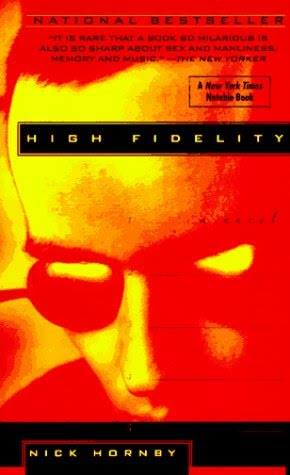
High Fidelity

Hard to believe it’s been 20 years since Nick Hornby’s third book and first novel captured the hearts of music geeks everywhere. Almost as surprising is that 5 years later it was made into a movie with the story transplanted from the UK to the US and it didn’t suck. Au contraire. (Then again, the latter was developed by an actor with a reputation for being a music geek, so…) Among book+ movie combos, it's still in our Top 5.


6/11/2015

Grave New World

The arrival of Apple’s new streaming/social network/radio station/dating service—don't be surprised if the latter is already in the development stages—has brought about yet another wave of discussions over the commercial viability of streaming, the public’s desire to physically own music, and the future of music itself.

As we see it, the desire to physically own music began to dwindle with widespread piracy, which more than anything, has separated true music consumers from the casual ones. Yes, a large chunk of people no longer spend money on pre-recorded music, but we’d venture that the vast majority of them are the marketplace descendants of those who in the ‘90s liked music well enough but owned 10 CDs or less and mostly listened to whatever was on the radio. Of course, you factor in a 21st century culture of not purchasing physical music and the number grows significantly, but those are, arguably, not true music fans; not as we would define them in the past, anyway. The consumers the biz has lost are the casual consumers, not the folks who own the catalog and the bootlegs, have seen the artist live half a dozen times, and own three different tour t-shirts.

So, who’s left? Those who are gladly willing to pay for music. But the marketplace has made it difficult for them with the number of shops dropping like flies. And shopping at Amazon just ain't the same thing. (By the way, this is why if you open a brick and mortar record store that sells vinyl, and jazz, classical and “heritage” artists in any format, you’ll probably do well if your rent is reasonable, ‘cause those consumers tend not to be attracted to illegal downloading. We could be wrong, tho.)

The record labels are reacting to streaming with business model paranoia—‘If we don’t get on this one, we’ll really miss out and really be screwed!’—and not some Machiavellian master plan. Again, they're not that smart. Evil, sure. But visionaries? Um, no. Regardless, the future looks grim for artists and/or songwriters to rise above the fray. We’re already seeing it with the glut of music available online and no one to separate the wheat from the chaff; or at least what you might like from what might not interest you as a consumer. As a matter of fact, we recommend upcoming artists treat their career as they would if they were opening a new business: find investors, record your own music, hire PR, and buy ads. Grave new world, indeed.

6/09/2015

Lester William Polsfuss (June 9, 1915 – August 12, 2009)

He’s universally known for the Gibson electric guitar model that bears his name, of course. But he was also a pioneer in the fields of guitar design, multi-track recording and effects. Which is why he’s in the Rock and Roll Hall of Fame and the National Inventors Hall of Fame. No one else has that distinction.
Plus, he was a kick ass guitar player, to boot, as we can see from this TV performance with his then-wife Mary Ford.
So today, on the 100th anniversary of his birth, let's salute the man who gave us not only a cool guitar but the various means to capture it for posterity as well.