9/09/2013

Here Comes Your Band

THE PIXIES
EP-1
[self-released-2013]
 
It was probably not necessary to time the backlash against the Pixies—once the dudes put out an official release sans bassist/vocalist Kim Deal—who quit the band in the midst of the sessions for this EP and made it formal this past June—the knives would be sure to come out. Maybe an egg timer would've sufficed.

First in line is—who else?—Pitchfork with their 1.0 review, which declares “There is no Pixies in this Pixies” and derisively aligns the song “Another Toe in the Ocean” with Weezer circa their self-titled 2001 comeback record aka The Green Album. (How the mighty have fallen: not even Weezer can escape the wrath of P4K’s bullshit revisionist history.) “If one of these songs had started playing over the credits of an American Pie knockoff...you would not blink.” Who barfed in your Fruit Loops, dude?

To be fair, the first three songs on EP-1 (“Andro Queen”, the aforementioned “Another Toe in the Ocean” and “Indie Cindy”) might be a tad more Frank Black and the Catholics than the mothership. Which is all the more surprising since it was helmed by none other than Gil Norton, who produced Doolittle, Bossanova and Trompe le Monde for the band. But the fourth and closing track, “What Goes Boom”, is what you’d expect from Charlie Thompson and his co-horts at this stage of the game: a nod at their past that’s not too reverential but nevertheless makes a point of reminding you what in fact you’re listening to.

So, is it a classic? Of course not. But it’s no embarrassment. And even though EP-1 is the band’s first official release of a new collection of songs since 1991, expectations aren’t as high as those faced by MBV, another beloved alt-rock institution which also hadn’t put out anything official since Nevermind. 

The Pixies are back as a regular recording unit, and if the nomenclature of this EP is any indication, there will be more where this one came from. Bottom line: Can’t see Pixies fans not enjoying this. Unless they’re a self-absorbed, Johnny-come-lately twit at an influential but ultimately harmful, noxious music website. All others proceed at will.

Subterranean Homesick Aliens


RADIOHEAD
Pablo Honey [Parlophone-1993]
The Bends [Parlophone-1995]
OK Computer [Parlophone-1997]
Kid A [Parlophone-2000]
Amnesiac [Parlophone-2001]
Hail to the Thief [Parlophone-2003]
In Rainbows [ATO-2007]
The King of Limbs [ATO-2011]

On September 13th, 1993, comedian Conan O'Brien made ​​his debut as host of Late Night with Conan O'Brien. As it turned out, his first musical guest was a British quintet from Oxford named after a Talking Heads song, with a growing buzz and whose debut album had been released in February of that same year.

It's not surprising, given what has transpired since Feb. 22, 1993, that the band's latter day fanbase would shun a debut album which led the object of their undying and unwavering obsession to be nicknamed "the British Nirvana"–the record was produced by the renown "grunge" team of Sean Slade and Paul Q. Kolderie, of Pixies and Hole fame–and was named after a Jerky Boys skit. (Of course this tidbit is somewhat shocking proof that the Oxford quintet once had a sense of humor.) But rather than a skeleton in their proverbial closet the band's uneven initial long player has its moments, including "You", "Anyone Can Play Guitar", "Ripcord", "I Can't" and–-to Thom Yorke's everlasting chagrin, we imagine–-their most famous song: the anthem of self loathing known as "Creep".
Although Pablo Honey held the title of Radiohead's weakest album until The King of Limbs showed up and blew it out of the water 2 years ago, it's not the filler-laden dud many would lead you to believe. In reality, it's always been a snapshot of a young band with a few decent songs attempting to find its footing. That their songwriting grew in leaps and bounds over the following two albums has sharply overshadowed Pablo Honey's simple charms in the two decades since its release. (Even Jonny Greenwood believes it's been underrated.) At the very least, it hints at what was to come just two years later.

If for some reason Radiohead had called it quits after Pablo Honey, "Creep" would have been its lone claim to fame; their legacy a "one hit wonder" label forever affixed besides their name. Fortunately, this was not the case. What followed was an amazing album, a remarkable leap in terms of songwriting and production and, arguably, the blueprint for '90s Brit-pop. Produced by the great John Leckie (Stone Roses, XTC ) and engineered by Nigel Godrich–the latter to become a close associate and collaborator of the band in the years to come–The Bends elevated Radiohead's status via five singles–"High and Dry", "Planet Telex", "Fake Plastic Trees", "Just" and "Street Spirit (Fade Out)"–as well as album tracks that became favorites ("Bullet Proof ... I Wish I Was" and the title track). In fact, Cast, Coldplay, Travis and a host of others should cough up royalties to Radiohead, grateful for having created this record. But the band's big musical statement was just around the corner.

 What else can be said about OK Computer that has not been repeated ad nauseum in the more than decade and a half since it was released? That it's an incredibly visionary album in which Radiohead further pushed their own musical boundaries? That not only is it one of the great albums of the '90s but of all time? That it was Dark Side of the Moon for a new generation? That producing it established Nigel Godrich's career? All that and more has been written and discussed about this great album that managed to presciently capture the empty feeling of the crushing daily routine, rampant consumerism, political disenchantment, and social and emotional alienation that marked Western life in the beginning of the 21st century.
Only three singles were released from the album: "Paranoid Android", "Karma Police" and "No Surprises". But despite the high caliber of these songs, OK Computer works best as a concept album, though it wasn't formally conceived as such. 

With a couple of classics under their belt, Radiohead once again surprised fans with a new musical direction on their next album. Disturbed by the legion of groups copping their style and disillusioned with the traditional parameters of rock music, vocalist and main songwriter Tom Yorke was motivated to go for a change of musical scenery. (Although, it must be said, "The mythology around [rock music] has run its course" is truly one of the most pretentious statements ever made by Yorke or any other rock star.)

Despite experimenting with an electronica-based sound, Kid A managed to retain much of the majesty of their previous album and reach the top of the album charts shortly after its release, later winning a Grammy for Best Alternative Album on the strength of "Everything in its Right Place", "The National Anthem", "How to Disappear Completely", "Treefingers", "Optimistic" and "In Limbo", among others.  

Amnesiac, meanwhile, is on the same wavelength as the previous album and was recorded during the same sessions as Kid A. But lacking similar presence, not to mention the same kind of impact as Kid A and taking into account that were recorded at the same time, it's not difficult to conclude that Amnesiac is a weaker, watered down version of Kid A, despite notable tracks as "Pyramid Song", "I Might Be Wrong" and "Knives Out".
  
The initial burst of faux studio verité–-a guitar being plugged into an amp–may well be an inside joke, signaling to Radiohead fans that the quintessential rock and roll instrument, and a big part of the band’s early sound, was back to the fore. But the fact that the very next sound is an anxious, programmed beat is what’s most telling: the promised return to The Bends-era guitar play was not to be this time out. However, the beloved six-string is featured more prominently than on the previous two releases and ultimately lets Hail To The Thief come across as a more conventional record–for Radiohead, anyway–than either Kid A or Amnesiac. This isn’t a dig: in fact, the songwriting and arranging are both close to the same level of artistry found on their masterpiece OK Computer, with Hail To The Thief including some of their very best work (“2+2=5”, “Sail To The Moon”, “Go To Sleep”,“There, There”, “A Punch-up at a Wedding”). This is the work of a band trying to find a compromise between classic songwriting and progressive/avant-garde experimentation; struggling between being true to the muse and not alienating and leaving its loyal fans behind. In lesser hands, this could spell death to a promising career. But Radiohead succeeds here way more often than not, and in the end that’s what makes this album such a wonderful listening experience: a love/hate relationship between man and machine that humbles one and humanizes the other. And we get to sit back and enjoy it.

After the expiration of their recording contract with EMI, Radiohead chose to release their next album on their own and let the public decide how much they would pay
–including nothing, if they so chose–for the digital download of this new album. This unleashed a whirlwind of opinions for and against from every conceivable corner of the music business: established and aspiring artists, critics and marketers, insiders and fans, etc. etc. etc. All this chatter eventually overshadowed the album itself, the brilliant In Rainbows. 

Kicking it off at a satisfying intensity level with the skittish, electronic Aphex Twin-influenced intro of “15 Step” and the krautrock-meets-Sonic Youth drive of “Bodysnatchers”, Radiohead’s heavily anticipated seventh studio album revels in moods and more often than not fails to return to the driving pulse which it starts off with. Sometimes it manages to do both. And the breathtaking, “Weird Fishes/Arpeggi” is a wonderful example. Further on, the haunting “All I Need”, with its hints of Massive Attack–like flourishes is probably the most straightforward Radiohead song since “Karma Police”. And yes, it’s a love song. ("House of Cards" is another highlight.) As for the rather uncharacteristic album title, the music certainly evokes the mood and peacefulness that comes with that calming celestial bridge of colors.

Because of its mostly abstract and static nature, The King of Limbs sparked polarizing reactions at the time of it release. A few critics and some fans alike considered it a throwback to the less interesting aspects of Radiohead's heavily electronic incursions, while others found it to be both beautiful and inspiring. Notwithstanding the divergent views, The King of Limbs sold respectably and was nominated for five Grammy Awards.

8/26/2013

Not Ready for Prime Time...maybe

One of the more frustrating—or liberating, depending on your perspective—aspects of the music business is the lack of absolutes. Many people will give you their theories, artists will retell the story of how they established themselves, and plenty of folks out there will sell you allegedly sure fire methods and techniques that practically guarantee success—we wrote about those scam artists here a while back—but the truth is, there is no sure way to get to the musical promised land. And then there are the precursors to 'American Idol': industry professionals who will bluntly analyze the commercial prospects of your music. For a fee, of course.

Mike McCready—not the Pearl Jam guitarist of the same name, btw—heads up one of these services. Music Xray purports to go a step further than similar services and function as a ground zero for artists wanting to be heard, industry pros looking for the next big thing, and fans searching for “music and talent targeted to their taste”. Sounds pretty cool, huh? Sure, but inevitably there will be gripes. And McCready recently addressed one of these in a blog post. He started off by quoting music artists in the abstract.

“For generations musicians have been saying, ‘If only I could get heard by the right people… I know they would love my music. I know they would see my talent'.”

McCready then went on to state that sometimes when given access to a level playing field, which his service ostensibly offers, artists often discover they’re not good enough for the big time. He then goess into an e-mail exchange with a dissatisfied Music Xray user who believes she’s wasted her money on the service. McCready responds in a respectful, professional manner that while she’s got “talent and a fantastic voice”, she’s not exactly ready for prime time. He wraps up his response by informing the artist in question that the couple of hundred bucks she spent on Music Xray was of “tremendous value” since for that measly amount she has learned her “music currently is not appropriate for the music industry.” McCready adds that it’s rough out there and that “if you want to be signed to Atlantic Records you’d better be in the same league as Bruno Mars.”

Just like we were probably the only ones on Earth who did not dislike Simon Cowell as a harsh 'American Idol' judge—they’re looking for the next Mariah Carey over there; if that’s not you, then you best skip 'AI' and its brethren, no matter what your friends tell you on Karaoke Night—we don’t really have a beef with McCready’s views. Furthermore, we  understand the type of service that McCready’s company offers and we're  sure it can be a valuable one. After all, it is quite possible that this artist has little commercial viability and that Mr. McCready’s assessment and that of his colleagues is correct. But, lest we forget, it was industry professionals who said guitar music was on its way out and rejected The Beatles; and industry professionals would surely reject, say, Robert Smith of The Cure if he were to appear as a contestant on one of today’s talent shows. (The number of artists who were rejected multiple times but were later signed on the strength of the same demo is legendary.)

Music Xray and its ilk thrive on artists' misapplied approach behind his initial quote above. Yes, artists hoping and trying to be discovered have all believed that reaching the right people is the first step to their success. However, “the right people” should be potential fans of your music not “suits”. Especially now that record companies want even more of their fingers in the artist's revenue pie and reaching potential fans on your own is easier than ever before.

Anyone who speaks the truth or has any common sense knows there is no silver bullet to achieve success and/or establish yourself in the music business. But perhaps the disgruntled Music Xray customer McCready quotes was better off spending her money trying to reach potential fans and not the approval of middlemen. (Hire a PR person; buy some online ads; hell, bribe an unscrupulous but popular music blogger...Malcolm X that shit.) At least that way she’d know for sure if the public likes her music or not. And whatever qualms Atlantic Records may have now, if people flock to her on her own in significant numbers, they’ll come calling. Even if she’s not as polished as Bruno Mars.

8/25/2013

Not Ready for Prime Time...maybe

One of the more frustrating—or liberating, depending on your perspective—aspects of the music business is the lack of absolutes. Many people will give you their theories, artists will retell the story of how they established themselves, and plenty of folks out there will sell you allegedly sure fire methods and techniques that practically guarantee success—we wrote about those scam artists here a while back—but the truth is, there is no sure way to get to the musical promised land. And then there are the precursors to 'American Idol': industry professionals who will bluntly analyze the commercial prospects of your music. For a fee, of course.

Mike McCready—not the Pearl Jam guitarist of the same name, btw—heads up one of these services. Music Xray, purports to go a step further than similar services and function as a ground zero for artists wanting to be heard, industry pros looking for the next big thing, and fans searching for “music and talent targeted to their taste”. Sounds pretty cool, huh? Sure, but inevitably there will be gripes. And McCready recently addressed one of these in a blog post. He started off by quoting music artists in the abstract.

“For generations musicians have been saying, ‘If only I could get heard by the right people… I know they would love my music. I know they would see my talent'.” 

 McCready then went on to state that sometimes when given access to a level playing field, which his service ostensibly offers, artists often discover they’re not good enough for the big time. He then goess into an e-mail exchange with a dissatisfied Music Xray user who believes she’s wasted her money on the service. McCready responds in a respectful, professional manner that while she’s got “talent and a fantastic voice”, she’s not exactly ready for prime time. He wraps up his response by informing the artist in question that the couple of hundred bucks she spent on Music Xray was of “tremendous value” since for that measly amount she has learned her “music currently is not appropriate for the music industry.” McCready adds that it’s rough out there and that “if you want to be signed to Atlantic Records you’d better be in the same league as Bruno Mars.”

 Just like we were probably the only one on Earth who did not dislike Simon Cowell as a harsh 'American Idol' judge—they’re looking for the next Mariah Carey over there; if that’s not you, then you best skip 'AI' and its brethren, no matter what your friends tell you on Karaoke Night—I don’t really have a beef with McCready’s views. Furthermore, I understand the type of service that McCready’s company offers and I’m sure it can be a valuable one. After all, it is quite possible that this artist has little commercial viability and that Mr. McCready’s assessment and that of his colleagues is correct.

But, lest we forget, it was industry professionals who said guitar music was on its way out and rejected The Beatles; and industry professionals would surely reject, say, Robert Smith of The Cure if he were to appear as a contestant on one of today’s talent shows. (The number of artists who were rejected multiple times but were later signed on the strength of the same demo is legendary.) Music Xray and its ilk thrive on artists' misapplied approach behind his initial quote above. Yes, artists hoping and trying to be discovered have all believed that reaching the right people is the first step to their success.

However, “the right people” should be potential fans of your music not “suits”. Especially now that record companies want even more of their fingers in the artist's revenue pie and reaching potential fans on your own is easier than ever before. Anyone who speaks the truth or has any common sense knows there is no silver bullet to achieve success and/or establish yourself in the music business. But perhaps the disgruntled Music Xray customer McCready quotes was better off spending her money trying to reach potential fans and not the approval of middlemen. (Hire a PR person; buy some online ads; hell, bribe an unscrupulous but popular music blogger...Malcolm X that shit.) At least that way she’d know for sure if the public likes her music or not.

And whatever qualms Atlantic Records may have now, if people flock to her on her own in significant numbers, they’ll come calling. Even if she’s not as polished as Bruno Mars.

7/20/2013

5 Interesting Developments in 2013 Music Sales (so far)

Interesting data compiled by Billboard from Nielsen's SoundScan report for the first 6 months of the year. Here are 5 developments that caught our attention:

- Justin Timberlake not only has the best selling album so far—physical and digital—it’s the only one to crack the 1 million sales mark. (It’s actually sold more than 2 million copies.)
Surprising, considering the audience for a pop star like Timberlake would likely, um, "file share" his new album to death, but no. Oh, and more albums have gone gold (500,000 copies sold) at this point (15) than by mid-2012 (11). But overall album sales have declined more than 5%. 

- Digital sales have decreased 2.4% from 2012.
As folks transition over to streaming services—which have seen their client base increase 24% from last year(!)—this will likely be a continuing trend. Looks like streaming might be eating into overall sales. Hmm...

- Vinyl sales of new albums has increased 33%.
This is a tad surprising but a nice bit of news. Also, it turns out the vast majority of vinyl consumers are fans of indie rock. Overwhelmingly so. Duh. Who else but DJs have that much love for vinyl, generally speaking?

- Sales are down at chains and independent stores alike.
Both are doing 17% less business. Sad, but true.

- So called “heritage acts” (artists who appeal to an older—i.e. baby boomer—audience) and country music still sell a respectable amount of CDs.
This isn't news. And if we could find a commercial spot with cheap rent so that we could open a record store specializing in jazz, classical and a helping of classic rock, we'd be making money off it, too.
And yeah, CDs sound way better than digital files. Significantly better.

7/13/2013

5 Solo Records Disguised as Band Albums

Unlike our "5 Real Solo Albums" feature, which highlights one-man-band records, these are a collection of albums ostensibly made by bands, but only due to various circumstances (binding legal agreements, commercial considerations, internal power struggles, etc.) do they bear the band's imprint, when in fact they carry the mark of a singular musical vision, sometimes forcibly so, reducing bandmates to sidemen status and invariably putting an end to whatever spirit of creative exchange was left in the band.

Here are 5 examples in alphabetical order by artist:

 
PAVEMENT Terror Twilight [Matador-1999]
Whether frontman Stephen Malkmus purposely decided to make Pavement’s fifth and final album a dry run for his solo career by refusing to have any songs by fellow guitarist/vocalist Scott Kannberg included on the album, is up for debate. But it’s telling that Malkmus chose Nigel Godrich (Radiohead, Beck) to produce the album, who confirmed the rest of the band’s wariness towards him by, in their estimation, producing the album as if he was working with The Stephen Malkmus Experience. (That deep into the Terror Twilight sessions Godrich did not know percussionist/keyboardist Bob Nastanovich’s name did not help matters one bit.) 

A tense world tour in support of the album sealed the band’s fate and Malkmus emerged with a self-titled debut solo album in early 2001.

PESCADO RABIOSO Artaud [Sony-1973]
Despite their brief lifespan, Pescado Rabioso are considered an important part of Argentina’s rock and roll history, mainly due to the involvement of legendary singer/songwriter/guitarist Luis Alberto Spinetta. The band only released three albums, but their third release, Artaud, is actually a Spinetta solo album. Internal friction over their sophomore release, the double album Pescado 2, led to the breakup of Pescado Rabioso in early 1973. (It’s quite plausible to assume the third album was released under the band’s name to fulfill legal obligations with their label, yet Spinetta would’ve been able to carry the LP under his own name having previously established himself as a solo artist.)

A highly influential classic within the realm Spanish-language rock, Artaud was recorded with Emilio del Guercio (bass) and Rodolfo Garcia (drums), Spinetta’s former bandmates in the also seminal pre-Pescado outfit Almendra, as well as his brother Carlos Gustavo Spinetta (drums). 20 years later Soda Stereo’s Gustavo Cerati covered Artaud’s “Bajan” on his first solo album Amor Amarillo [BMG-1993].


PINK FLOYD The Final Cut [Columbia-1983]
After the themes of alienation, abandonment and overall disconnect that informed The Wall [Columbia-1979] were rendered with a varied palette on a wide canvas, its follow-up turned out to be a dour, homogenous lesser version of that iconic double album, which in hindsight would be seen as the blueprint for Roger Waters’ subsequent solo releases. 

An anti-war concept album much disliked by the band’s vocalist/guitarist David Gilmour, The Final Cut is the only Pink Floyd album solely written by Waters. Gilmour’s lone lead vocals are on “Not Now John”, the only single released from the album and a pointed attack on director Alan Parker’s perceived watering down of the film version of The Wall. (The photo of a soldier with a knife in his back while carrying a film canister, which was included as part of The Final Cut's artwork, leaves no doubt of its message.) So, The Wall was too commercial, eh? Really? Man…

THE POLICE Synchronicity [A&M-1983]
Although Sting wrote the lion share of the band’s material, drummer Stewart Copeland and guitarist Andy Summers—particularly the former—saw their songwriting contributions to The Police’s albums further reduced when Sting decided to no longer sing lead on any song not written by him, circa Zenyatta Mondatta [A&M-1980]. (He later eased up slightly on that position but by then the damage to egos and group morale had already been done.) So, as the band’s main songwriter—and with a few hits under his belt by that point—Sting began exerting his influence and power, barring Summers’ “Omegaman” from being released as a single from Ghost in the Machine [A&M-1981]. 

By the time it came to make the next and final album, not only did the songs evidence less of the distinctive, reggae-influenced Police sound, favoring a more Adult Contemporary vibe—particularly on the album’s second half: “Every Breath You Take”, King of Pain”, “Wrapped Around Your Finger”, “Tea in the Sahara”—Sting was so entrenched in dictating the direction of the album and the performances of his bandmates that he came to actual blows with Copeland during the recording of “Every Breath You Take” and rendered producer Hugh Padgham practically superfluous in the process. If this is The Police album that most sounds like Sting’s solo output to you, now you know why.

THE REPLACEMENTS All Shook Down [Sire-1990]
There is absolutely no doubt this was supposed to be a Paul Westerberg solo album: that much has been confirmed. Why the shift from solo disc to Replacements album? Well, that has never been officially explained. And it’s not like the battered, bruised and disillusioned Replacements’ name was a superior commercial proposition, as the disappointing sales for the previous release, Don’t Tell a Soul [Sire-1989], will readily attest to. Westerberg’s official solo debut would have to wait, at least in name only.

Meanwhile, a singer/songwriter album heavy on acoustic guitars and full of guest musicians, including John Cale, Johnette Napolitano, Terry Reid, and Benmont Tench, with a smattering of performances by fellow Replacements Slim Dunlap, Chris Mars and Tommy Stinson—although, pointedly, never all four on the same track—got the Mats’ moniker slapped on it and became the band’s somewhat muted send-off.


A decent album—certainly of a higher caliber than some of what Westerberg released later on as a full-fledged solo artist—yet All Shook Down comes across more as the sound of a white flag being waved than a proper goodbye.

Honorable Mention:

BLACK SABBATH
Every album between 1986 and 1995 except Dehumanizer [Warner Bros-1992] is essentially a Tony Iommi solo album.

[All album cover artwork courtesy of The All Music Guide.]

7/08/2013

Spin the (empty moonshine) Bottle

Unless it’s done to conceal or rehabilitate a damning past or water down a perhaps too strident orthodoxy, revisionism is not necessarily a bad thing. By definition, its intent is to challenge pre-existing views or theories. Nothing wrong with keeping us all honest. But when it’s done as a clear but feeble attempt to blithely alter a paradigm, or worse, to appear cool and/or be subversive, it has wandered into sad, unfunny joke territory. To wit: Spin magazine’s recent list of the “100 Greatest Guitarists of All Time”.

We have neither the time nor inclination to go any further into dismantling the list, but any aggregate of this nature which includes Skrillex (?!); has Jack White and Steve Albini (?!) ranked higher than, say, Robert Fripp; and features Jam Master Jay (??!!) in its top 10, is just an exercise in douchebaggery. Simple as that.

7/03/2013

Sorry, No Billy Batson Here

[Photo courtesy of The Shazam]
THE SHAZAM
The Shazam (self-titled) 
[Not Lame-1998]

Godspeed The Shazam 
[Not Lame-1999]

Rev 9 
[Not Lame-2000]

Tomorrow the World 
[Not Lame-2003]

Meteor 
[Not Lame/New Boss-2009]

One of the most perplexing things about the music biz is how, save a few aberrations, a style so innately catchy and melodic has been perpetually relegated to cult/underground status. That’s been largely the burden power pop has had to bear over the years despite its potentially commercial promise. Regardless, we’re not going to delve more into that sob story but instead introduce you to another ‘shoulda been huge’ act: The Shazam.

Based in Nashville and led by vocalist/songwriter/guitarist Hans Rotenberry, these guys have been at it since the late ‘90s, with 5 high caliber albums to their credit. And contrary to many practitioners of this particular subgenre, about whom we've regularly balked at how they routinely sacrifice power for pop, The Shazam pass that test with flying colors. In fact, never shying away from the more bombastic sounds of the ‘70s means their music bears the mark of Cheap Trick, The Move and The Who; while hiring Mack (Queen, ELO) to produce their 5th and most recent album, Meteor, leaves no doubt where the quartet's sensibilities lie.

Recommended If You Like: Badfinger, Cheap Trick, The Move, The Posies, The Who.

7/02/2013

What We're Listening To

PETER FRAMPTON Frampton [A&M]
MARISA MONTE Barulhinho Bom [EMI Brazil]
MUTANTES Tudo Foi Feito Pelo Sol [EMI-Brazil]
VAN HALEN Fair Warning [Warner Bros]
NEIL YOUNG Zuma [Reprise]

What are you listening to?

6/29/2013

The Rise of a Power Pop Phoenix

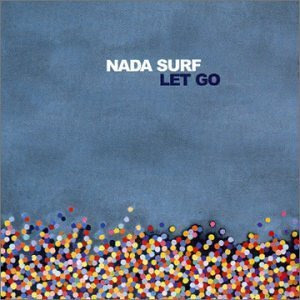
NADA SURF 
Let Go 
[EMI-2003] 

The frequent comparisons to Weezer that plagued them since the release of their hit single "Popular" (which was also produced by former Cars frontman Ric Ocasek), from their debut album High/Low [Elektra-1996], eventually turned into an albatross when clashes with their label, Elektra, over the commercial viability of the followup album, The Proximity Effect [MarDev-1998], led to the label dropping the band. So that's it, right? Just another '90s one-hit-wonder, huh? Not quite.

Getting their house in order over the next few years, the Brooklyn-based trio emerged from their hiatus with an engaging, gimmick-free collection of top-notch guitar pop. The crunchy guitars from High/Low were still present, but a lot more subtlety, maturity and definition to Nada Surf's overall palette accompanied them on Let Go.

Sounding uncannily like a band that's assessed their gifts and weaknesses, balanced them out, and delivered their very best, Let Go was not only our favorite album of 2003, but its success was the inspirational tale of a band rising from the ashes of an ostensibly doomed career and re-establishing themselves as one of the main purveyors of their style of music. Many had left these guys for dead after “Popular” had supposedly condemned them to one-hit-wonder/where are they now? status, but they bounced back and released one of the best records of the past decade. And modern day power pop fans are all the better for it.